
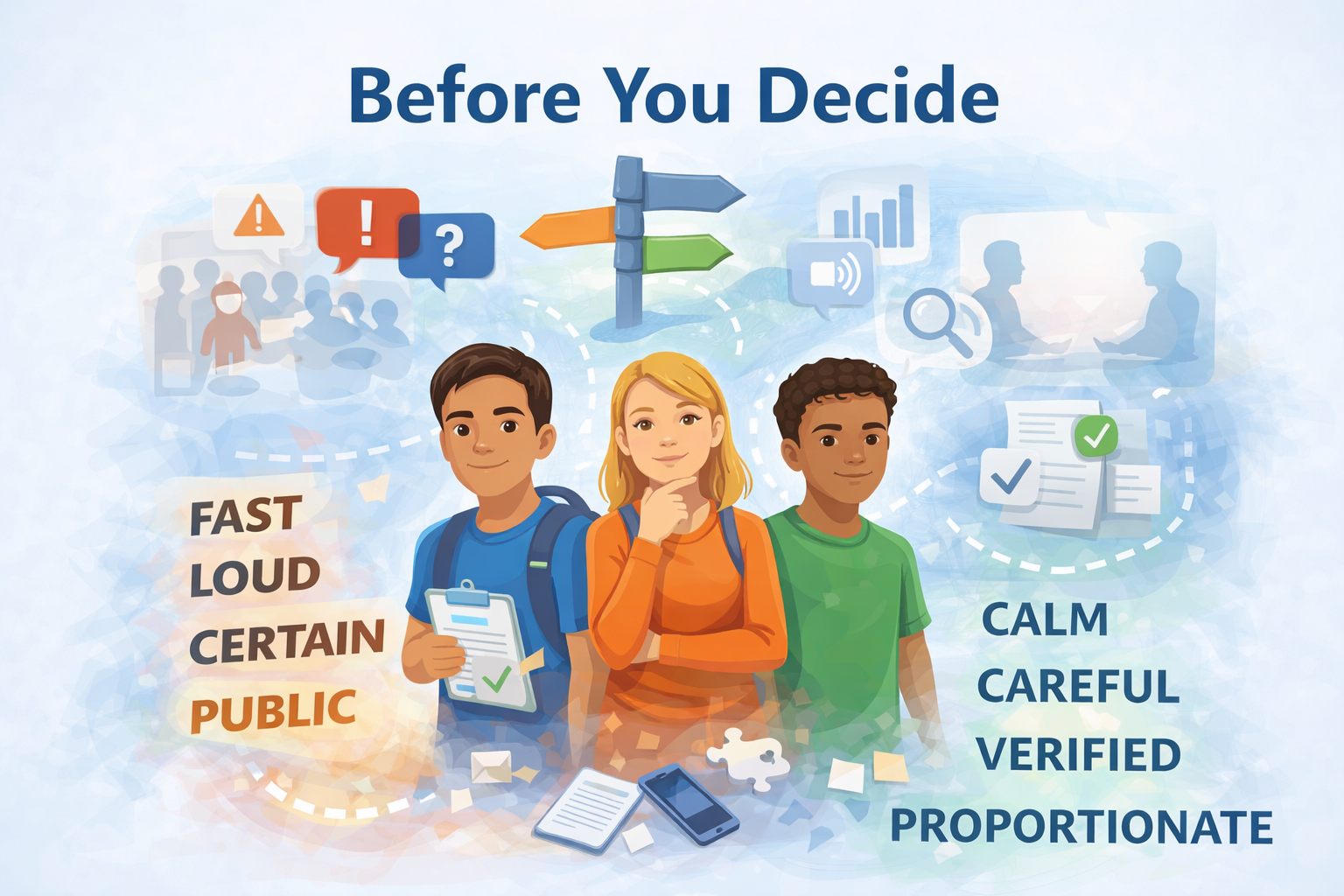
Teaching Judgment, Pressure, and Responsibility
The school pages of The Geneva Charter are designed to help students think more clearly when situations become emotionally charged, socially pressured, or evidentially unclear. This guide is for teachers who want to use those pages in a serious, structured, and age-appropriate way.
The aim is not to produce identical views. It is to strengthen disciplined thinking, fairness under uncertainty, and the ability to distinguish evidence, interpretation, and decision before judgment hardens.
Start with the student pages
Each age band has its own page, tone, and level of conceptual depth. Start with the student-facing page that matches the class. Then use this teacher guide to shape delivery, pacing, classroom atmosphere, and follow-up discussion.
Ages 11–13
Early foundations. Fact, assumption, fairness, and the habit of slowing down before reacting.
Open pageAges 14–16
Social pressure, screenshots, confidence, belonging, and the difference between evidence and conclusion.
Open pageAges 16–18
Crisis thinking, responsibility, revision of judgment, and balancing urgency with fairness.
Open page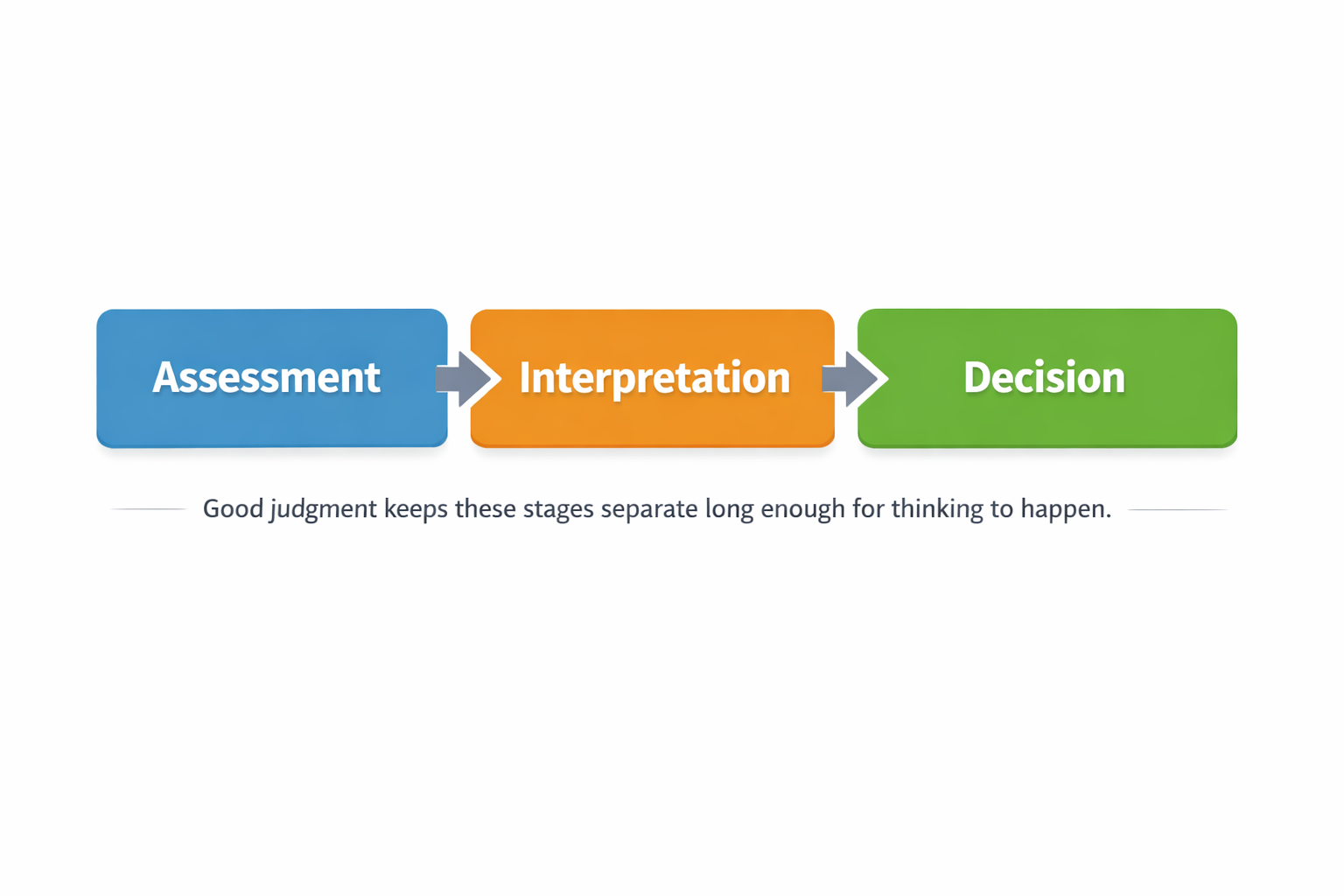
Core teaching principle: good judgment keeps assessment, interpretation, and decision separate long enough for thinking to happen.
What students may be experiencing before they say anything
Many students are trying to make sense of fast-moving situations while also managing embarrassment, group pressure, fear of sounding weak, and uncertainty about what is actually true.
Teachers need to remember that silence, hesitation, or a quick borrowed answer may all be signs that the student is under interpretive pressure rather than genuinely clear.
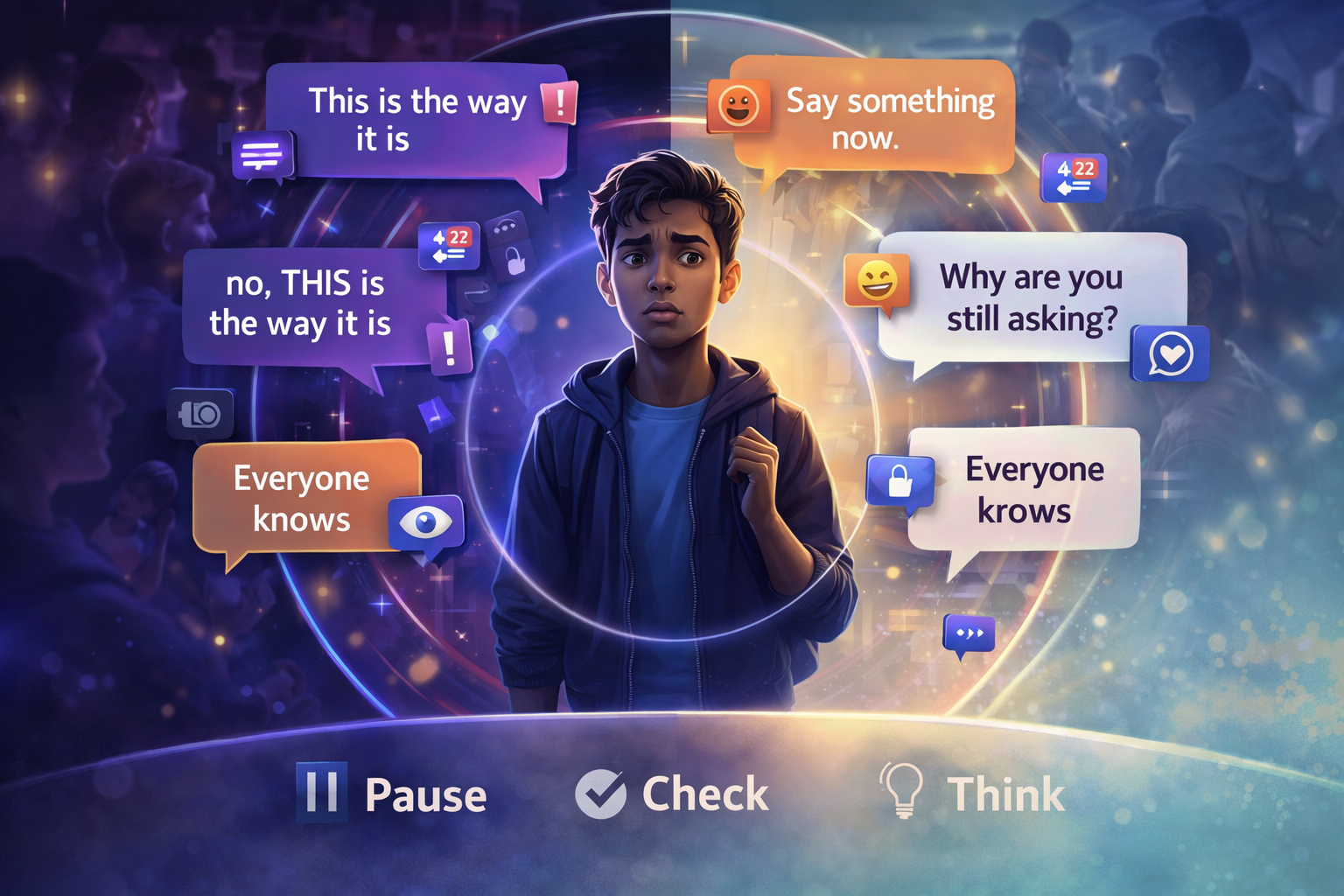
Teaching implication: students often need permission, structure, and time before they can think well in public.
What this educational track is trying to build
Students should gradually learn to
- separate what is known from what is assumed
- notice when pressure changes judgment
- resist premature certainty
- revise conclusions when new facts emerge
- understand that fairness often requires delay
Teachers should help students practice
- structured discussion under uncertainty
- reasoning before reaction
- evidence-based interpretation
- proportionate next-step thinking
- confidence grounded in discipline, not speed
These are not only classroom skills. They are civic, institutional, and leadership skills.
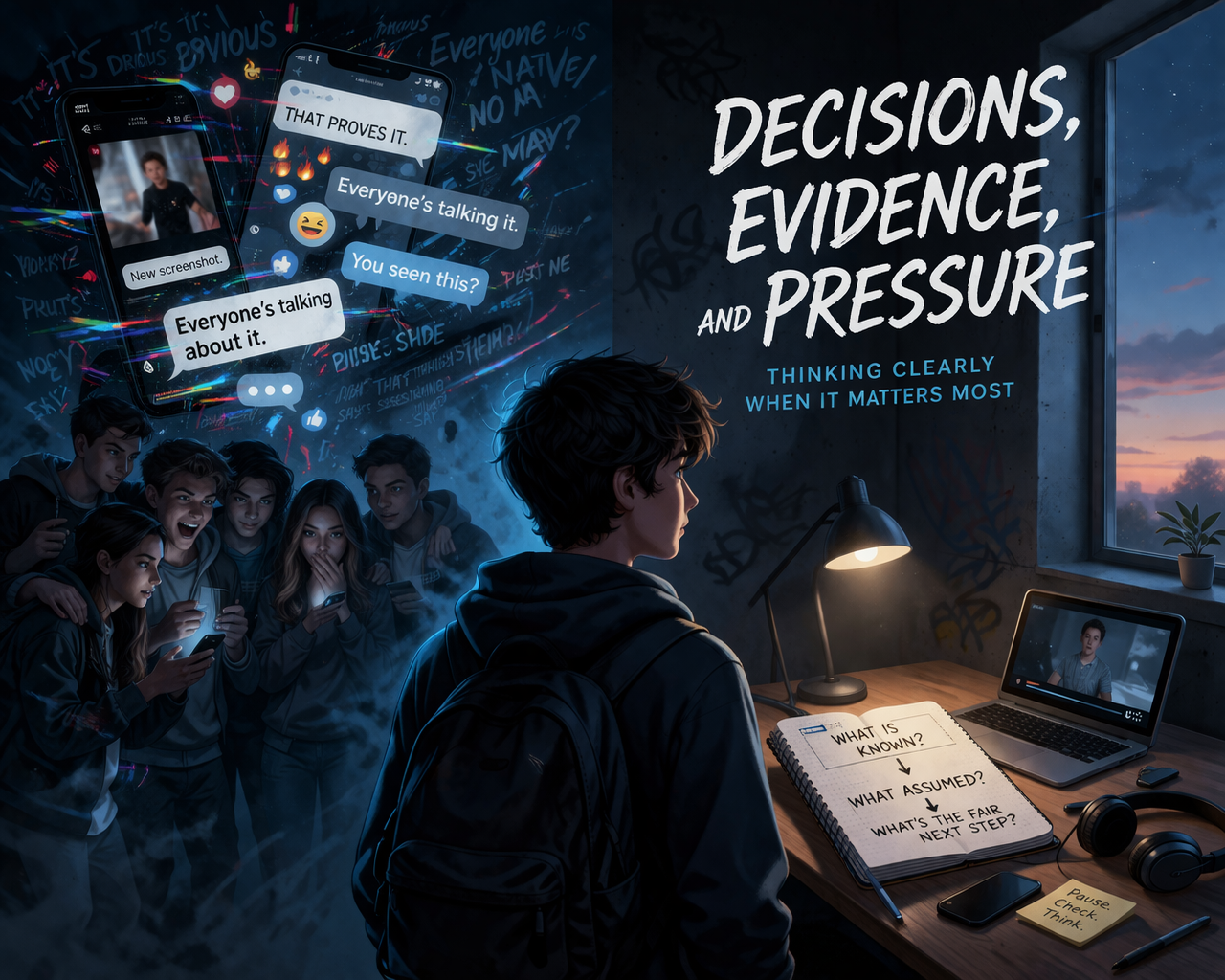
Ages 11–13: Foundations of thinking before reacting
Focus
- basic difference between fact and guess
- recognising that a story may be incomplete
- learning that first impressions may be wrong
- basic fairness and listening discipline
Best teaching approach
- short scenarios and simple examples
- paired work before whole-class discussion
- clear, repeatable question structures
- visual tools rather than abstract explanation
At this stage, the aim is not complexity. It is habit formation. Students should begin to feel that asking “what do we actually know?” is normal, not unusual.
Ages 14–16: Pressure, influence, and early judgment
Focus
- how social pressure shapes judgment
- how confidence influences groups
- how screenshots, clips, and fragments distort understanding
- how belonging and fear affect what students say publicly
Best teaching approach
- structured discussion with reflection pauses
- realistic but non-traumatic school-based examples
- compare evidence, interpretation, and decision
- make pressure itself part of the lesson
This age group is often the most visibly shaped by reputation, group dynamics, embarrassment, and fear of exclusion. That makes this stage especially important.

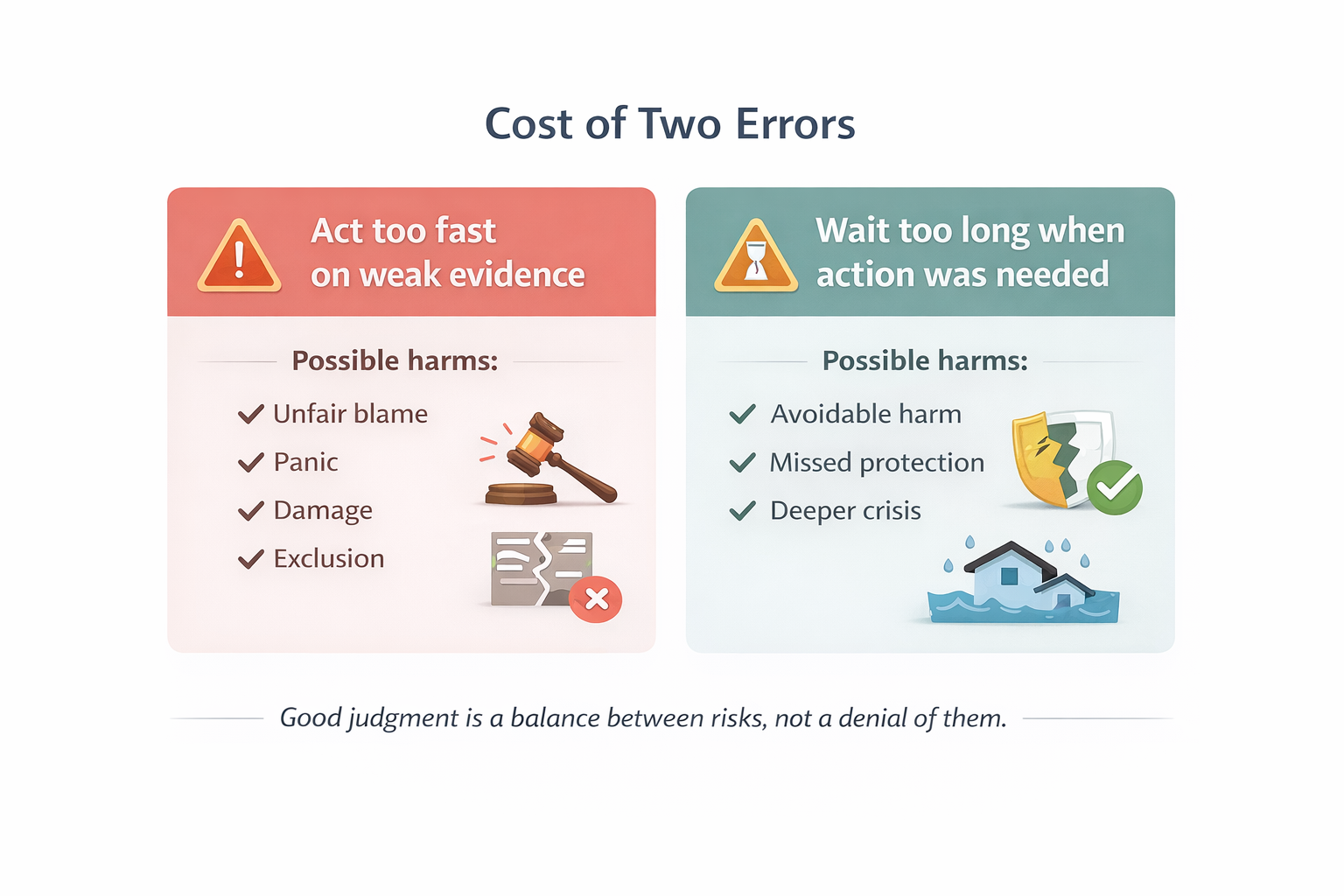
Key teacher message: the risks of acting too fast and the risks of waiting too long both matter. Good judgment means balancing them.
Ages 16–18: Crisis thinking and responsibility
Focus
- assessment versus interpretation versus decision
- balancing urgency with fairness
- responsibility under uncertainty
- revision of judgment when new facts arrive
Best teaching approach
- multi-stage scenarios released in rounds
- public revision of early conclusions
- more explicit discussion of consequences
- decision frameworks, not free-form opinion only
At this stage, students are capable of understanding that responsibility is not simply reacting. It is acting in ways that remain defensible when the picture becomes clearer.
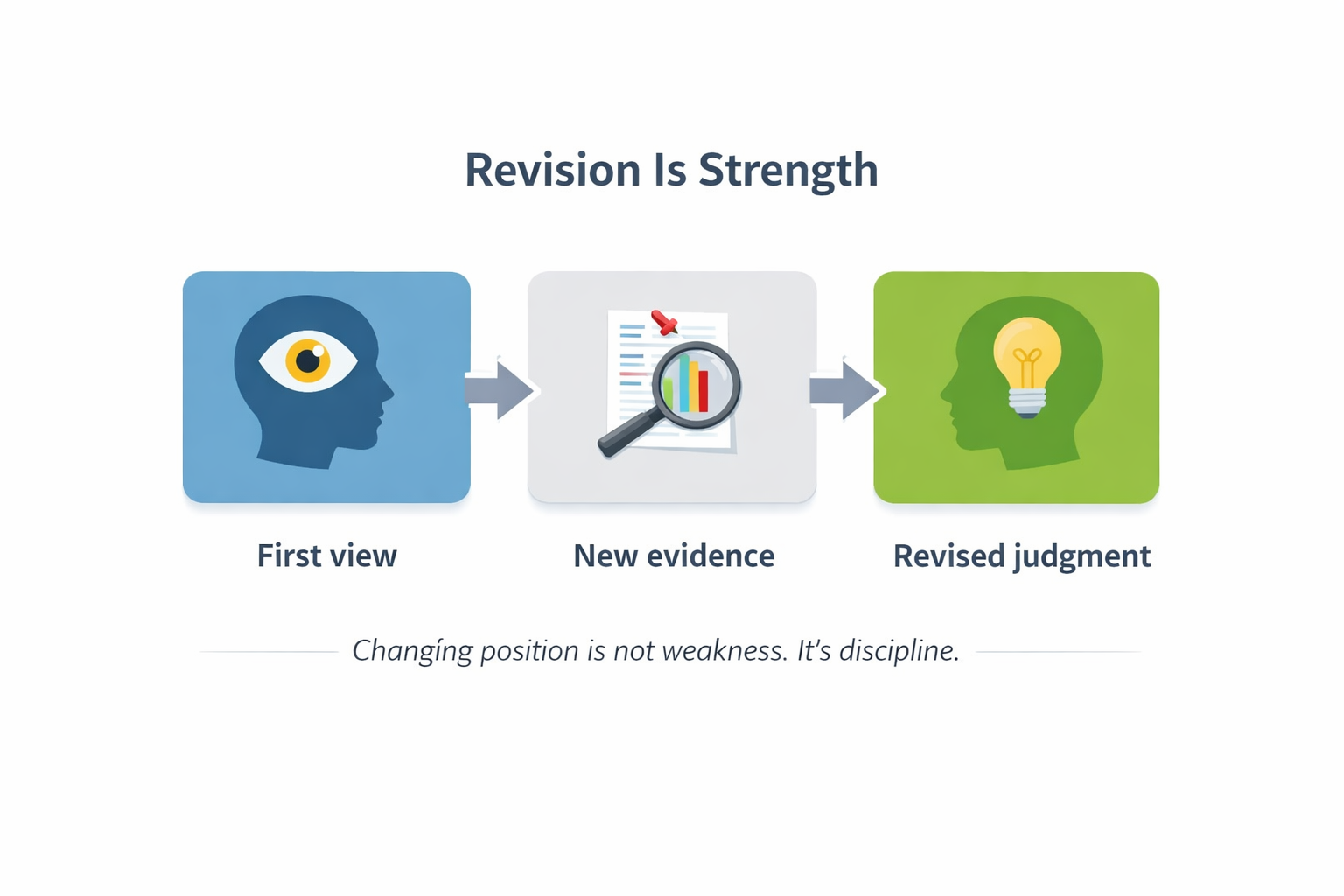
Key teacher message: changing your judgment when new facts arrive is not weakness. It is discipline.
18+ extension: where older students should go next
For sixth form, early university, foundation programmes, or adult learning, the framework can move beyond school scenarios and into wider public life.
Suggested directions
- media analysis and narrative distortion
- public statements under uncertainty
- policy and institutional decision-making
- case analysis of real crises
- ethical and evidential tension under pressure
What should change at 18+
- more ambiguity, less simplification
- greater tolerance for unresolved complexity
- comparison of competing interpretations
- evaluation of proportional response options
- clearer attention to downstream consequences
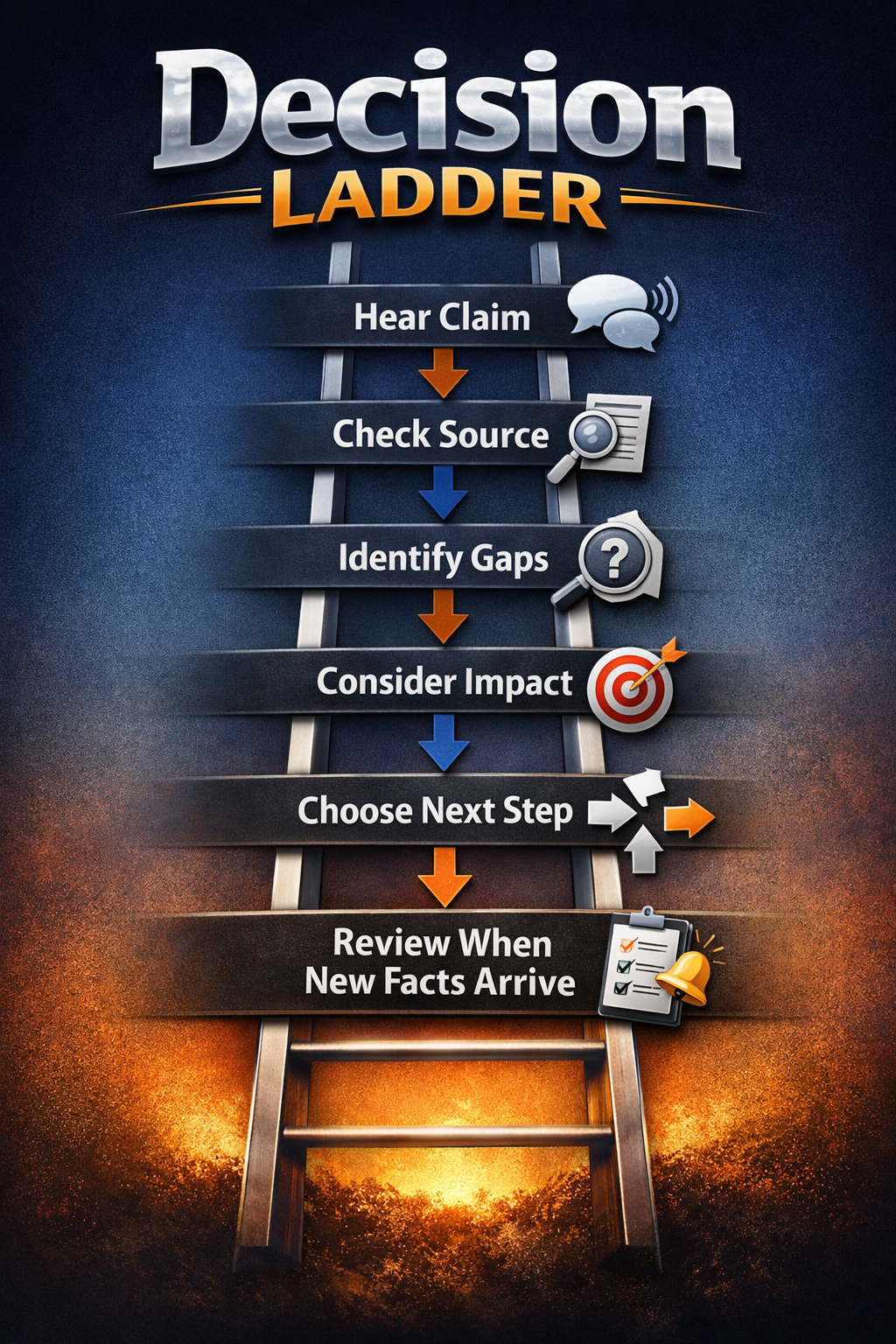
Extension principle: the aim is not to force agreement. It is to strengthen the ability to think responsibly in situations where agreement is difficult.
A learning track for teachers themselves
Teaching this material well requires a shift in classroom posture, not only a new lesson plan.
Stage 1: Structure before content
Focus first on how students think, not only on what they conclude. The method matters as much as the material.
Stage 2: Protect uncertainty
Make room for “we do not yet know.” If uncertainty is penalised, students will rush toward borrowed certainty.
Stage 3: Separate roles in the room
Repeatedly distinguish: what is known, what is assumed, and what should be done.
Stage 4: Normalise revision
Require students to update their views when new information arrives. Make revision a sign of seriousness, not embarrassment.
Stage 5: Watch classroom pressure
Notice dominant voices, fast moral certainties, performative confidence, and quiet students who may be unsure but unwilling to speak.
Stage 6: Teach proportional next steps
Not every unclear situation requires the strongest response. Students should learn that proportion matters as much as intention.
Recommended reading track for teachers from the wider Geneva Charter
Teachers who want to ground themselves more deeply in the wider framework should not try to read everything at once. A staged reading track works better.
Track 1: Start with orientation
These pages give teachers the broad architecture before they move into pressure, distortion, or crisis-specific material.
- Start Understanding
- Analytical Framework
- What International Law Is and What It Is Not
- Frequently Misunderstood Concepts
Track 2: Learn the core pressure logic
These pages help teachers understand why pressure changes interpretation, why uncertainty narrows, and why people move too quickly from fragment to conclusion.
- Interpretive Compression in Crisis Decision-Making
- Technical Claims and Verification
- Divergence of Legal Standards Under Crisis Pressure
- Narrative Breakdown Under Pressure
Track 3: Understand legitimacy and judgment
These pages deepen the teacher’s ability to explain why evidence, process, and proportionality matter before action.
- The Legitimacy Framework
- The Legitimacy Chain
- When Is Force Legitimate
- What Is a Threat
Track 4: Media and interpretation
This part is especially useful for teachers working with older students, media literacy, current affairs, or civic education.
- Media Interpretation
- Technical Claims and Verification
- Journalists, Observers, Rapporteurs
- Verification, Investigative Monitoring
Track 5: For teachers of older students
For 16–18 and 18+ settings, these pages help connect classroom judgment to public and institutional decision-making.
- Policy Diplomatic
- The Coherence Requirement in the Use of Force
- Use of Force and the Integrity of Collective Security
- Legal Accountability and Adjudication
Track 6: One step wider
When teachers want to understand the larger setting in which all this sits, these pages help explain why such educational work matters beyond school.
- The Strategic Moment
- Law-Time Paradox
- The Geneva Charter Framework
- How The Geneva Charter Is Used
Recommended sequence for a teacher using this track
Step 1
Choose the age page that matches the class and read it first as the student would encounter it.
Step 2
Decide in advance where you expect pressure, uncertainty, disagreement, or emotional response to emerge.
Step 3
Set explicit discussion rules: evidence first, interpretation second, decision third.
Step 4
Use at least one exercise that requires students to change or refine their initial view.
Step 5
Close by asking what students now see differently, not only what opinion they hold.
Step 6
Return later to the same framework so that these habits become repeatable, not one-off.
Classroom conditions that help this work
Helpful conditions
- enough pace to keep focus, but not so much that thought is rushed
- a room where uncertainty can be spoken without ridicule
- clear distinctions between observation, inference, and action
- teacher modelling calm rather than urgency
Conditions that weaken the lesson
- rewarding the fastest answer
- treating doubt as moral weakness
- allowing one confident narrative to dominate too early
- choosing examples so close to live conflict that thinking collapses into exposure
What this approach develops over time
- intellectual discipline under pressure
- fairness in uncertain situations
- resistance to manipulation and narrative shortcuts
- ability to revise without loss of credibility
- confidence grounded in reasoning rather than reaction
- more responsible participation in civic and institutional life
These pages are not designed to make students passive. They are designed to make them more careful, more responsible, and harder to mislead.
Teacher Note
The most important teaching move in this entire track is simple: do not let speed define quality. Many students have learned that fast confidence looks strong. This material helps them discover that good judgment is often slower, clearer, and more accountable.
Used well, the school pages do more than support discussion. They train habits of thinking that remain useful far beyond school.
