
Decisions, Evidence, and Pressure
By this age, you already know that life is not only about facts. It is also about pressure, reputation, belonging, embarrassment, loyalty, fear, attraction, anger, and how quickly people decide what they think happened.
This page is about learning how to think clearly when other people are reacting fast, when messages spread quickly, and when confidence can sound stronger than evidence.
Why this matters now
At 14 to 16, social life becomes more intense. Group chats matter. Reputation matters. Being included matters. Being left out matters. A screenshot, a rumor, a short clip, or a confident comment can change how people see someone very quickly.
That means one of the most important skills you can build is this:
learning not to confuse a fast reaction with a true understanding.
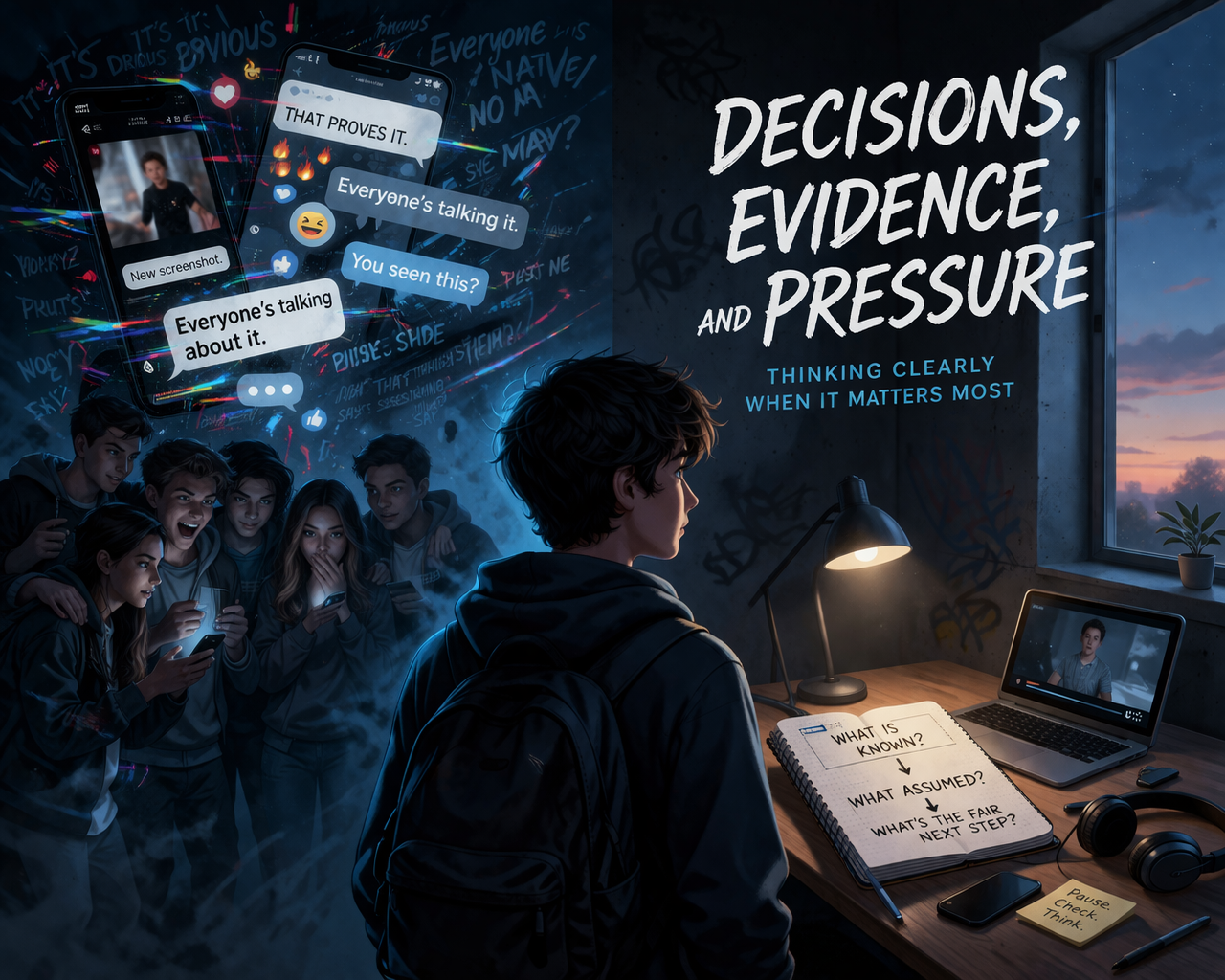
A situation many students will recognize
Someone says, “That proves it.”
Another says, “Everyone already knows.”
A few people react with laughing emojis. Someone leaves the chat. Someone else stays silent.
By the next morning, people are treating the situation as settled.
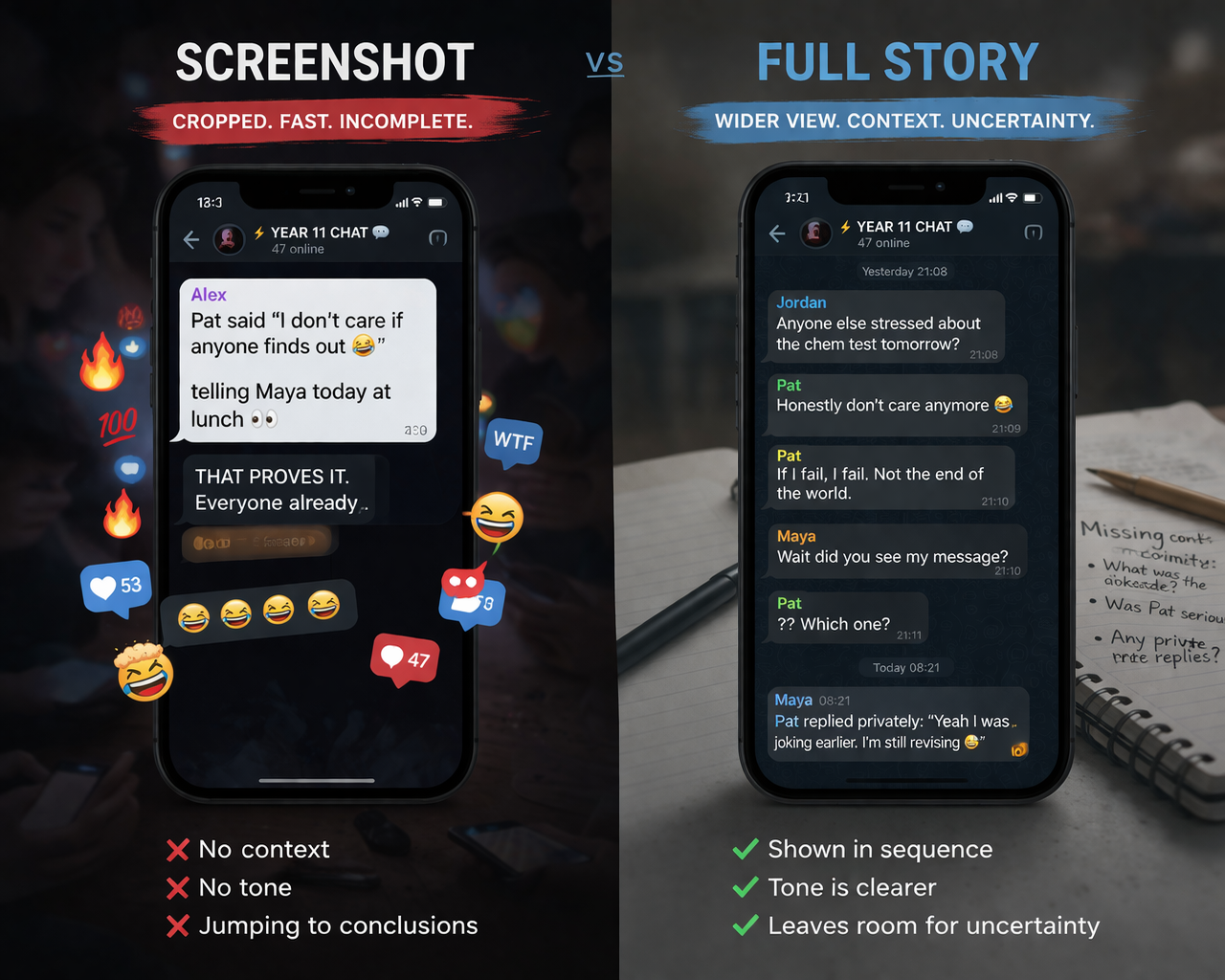
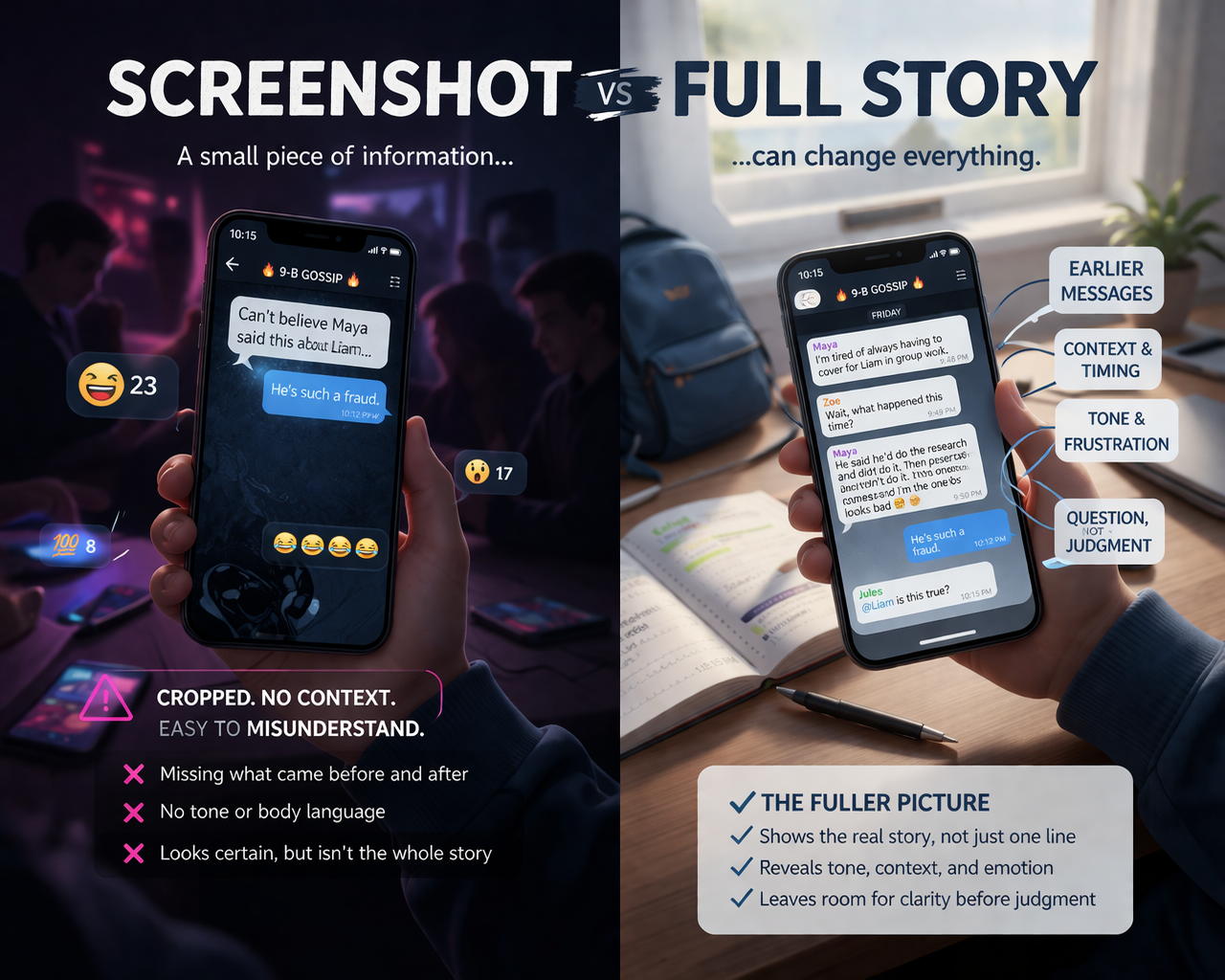
But a screenshot is only one piece of information.
It may be real. It may be cropped. It may be missing what happened before or after. It may not show intention, pressure, tone, or context.
A small piece of evidence can create a very big conclusion.
Evidence is not the same as a conclusion
Evidence
What you can actually point to. A message. A photo. A clip. A statement. A witnessed event.
Interpretation
What you think it means. Why it happened. What kind of person someone is. What should happen next.
Decision
What you then do. Repeat it, share it, judge someone, defend someone, exclude someone, report it, or pause.
The problem starts when people jump from evidence to decision without slowing down at interpretation.
Why pressure changes how people think
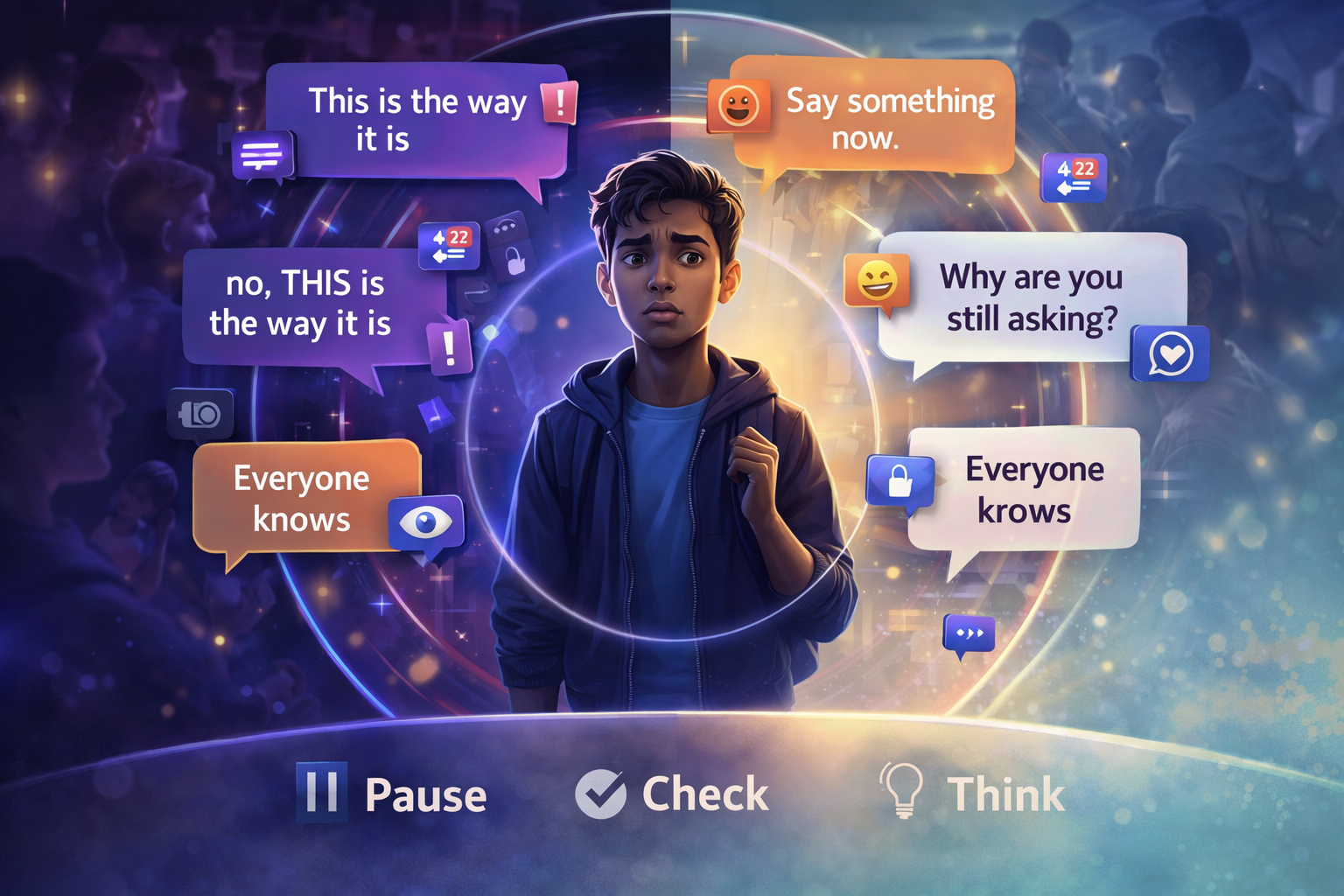
Pressure does not always look dramatic. Often it looks ordinary.
It can sound like this
- “Come on, everyone knows.”
- “Why are you defending them?”
- “Just say what side you’re on.”
- “If you stay quiet, that says everything.”
It can feel like this
- not wanting to look weak
- not wanting to be the only one unsure
- not wanting to lose status or belonging
- not wanting others to turn on you next
Under pressure, people often become more certain, not because they know more, but because uncertainty becomes uncomfortable.
Sometimes people speak strongly because they feel socially pushed, not because they are actually sure.
Another situation
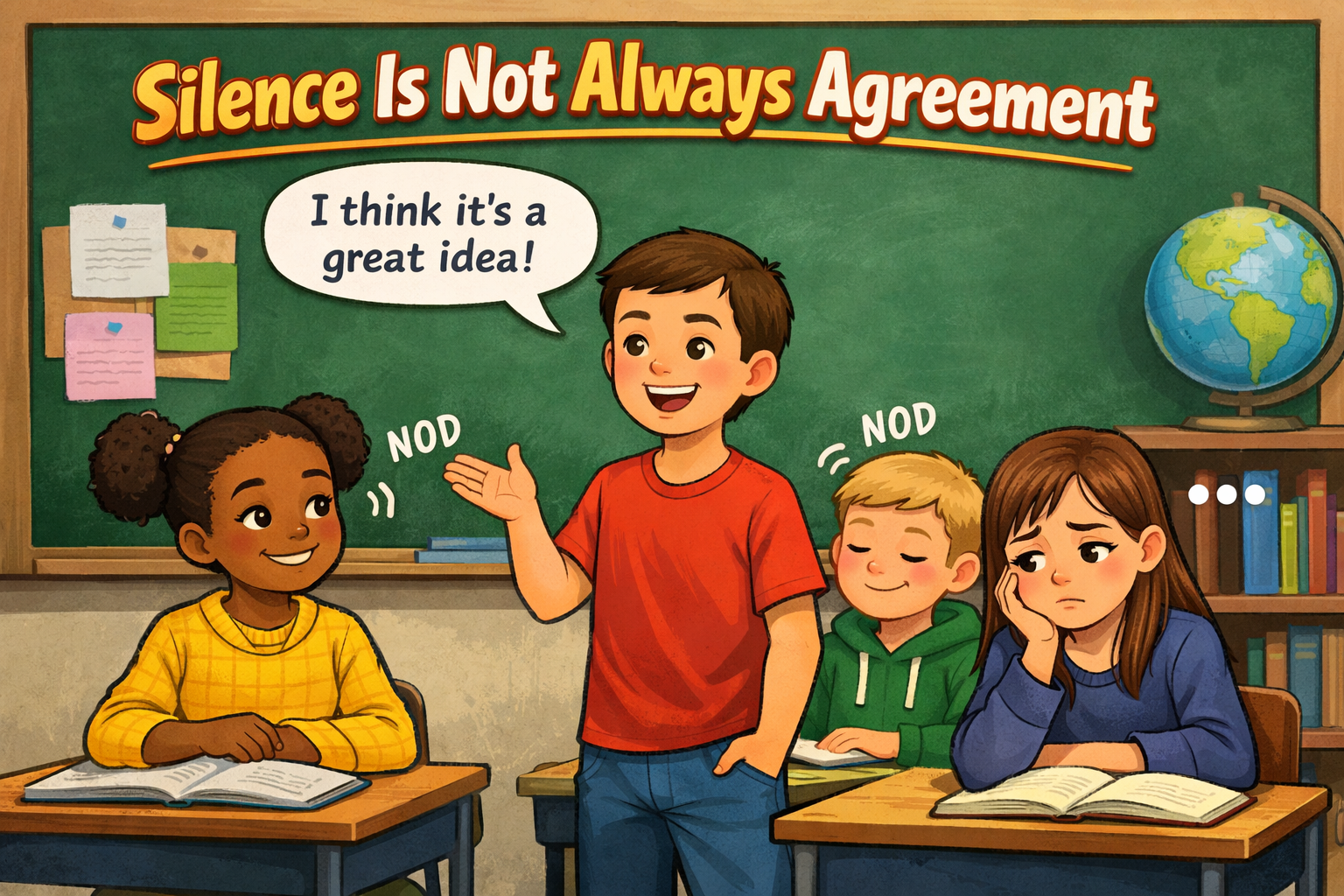
One student answers quickly. It sounds polished. Others nod. You are not fully convinced. But now speaking feels risky.
This does not only happen in classrooms. It happens in friendship groups, online discussions, sports teams, families, and public debate.
Silence does not always mean agreement. Sometimes it means pressure.
Why confidence can be misleading
Confidence is powerful. People are drawn to it. But confidence and truth are not the same thing.
What confidence can do
- make others follow quickly
- shut down questions
- make doubt feel embarrassing
- turn a guess into a group belief
What careful thinking does
- asks what is actually known
- checks what is missing
- slows the jump to judgment
- makes fairer decisions possible
A confident answer may sound stronger. A careful answer is often more trustworthy.
What you can do
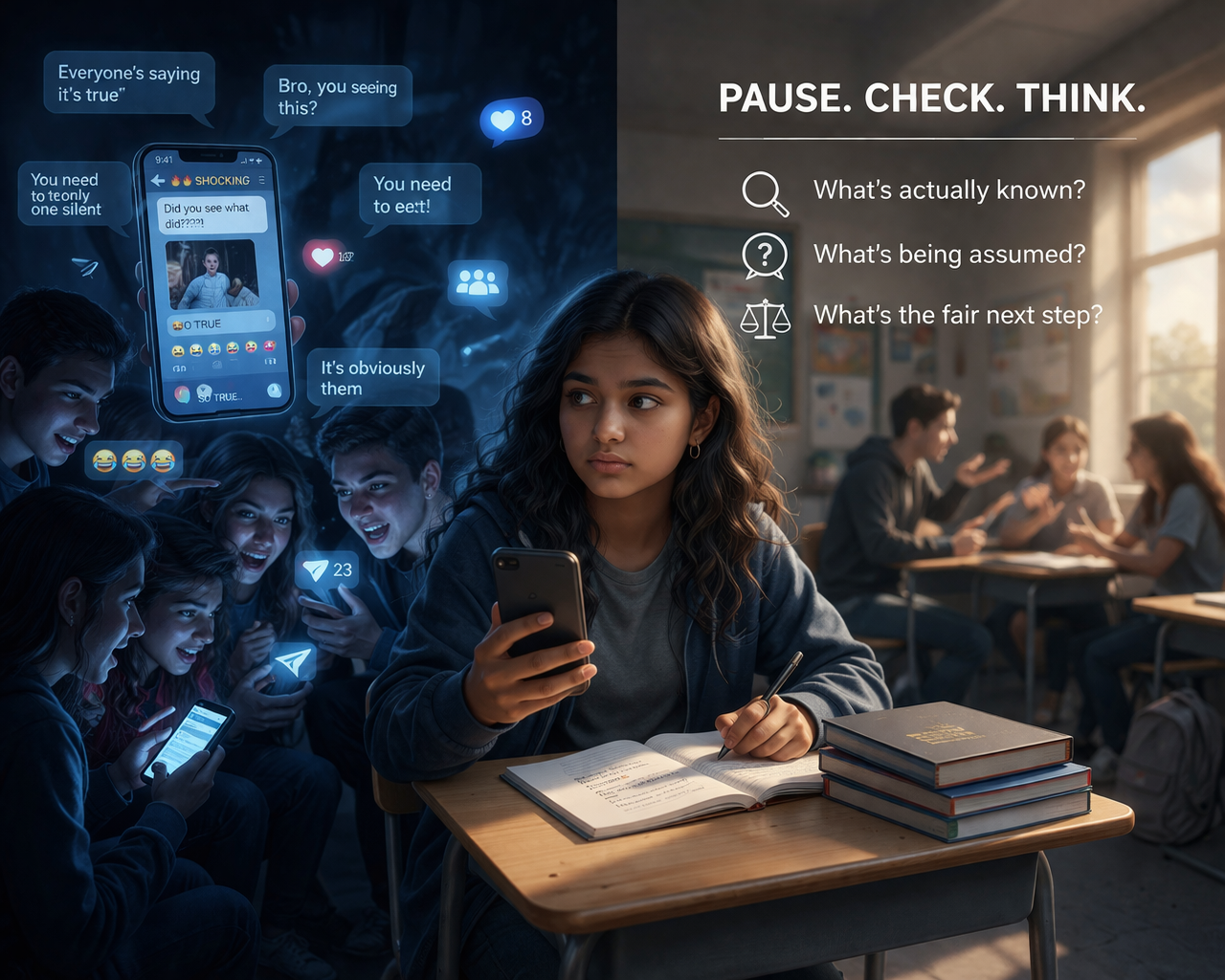
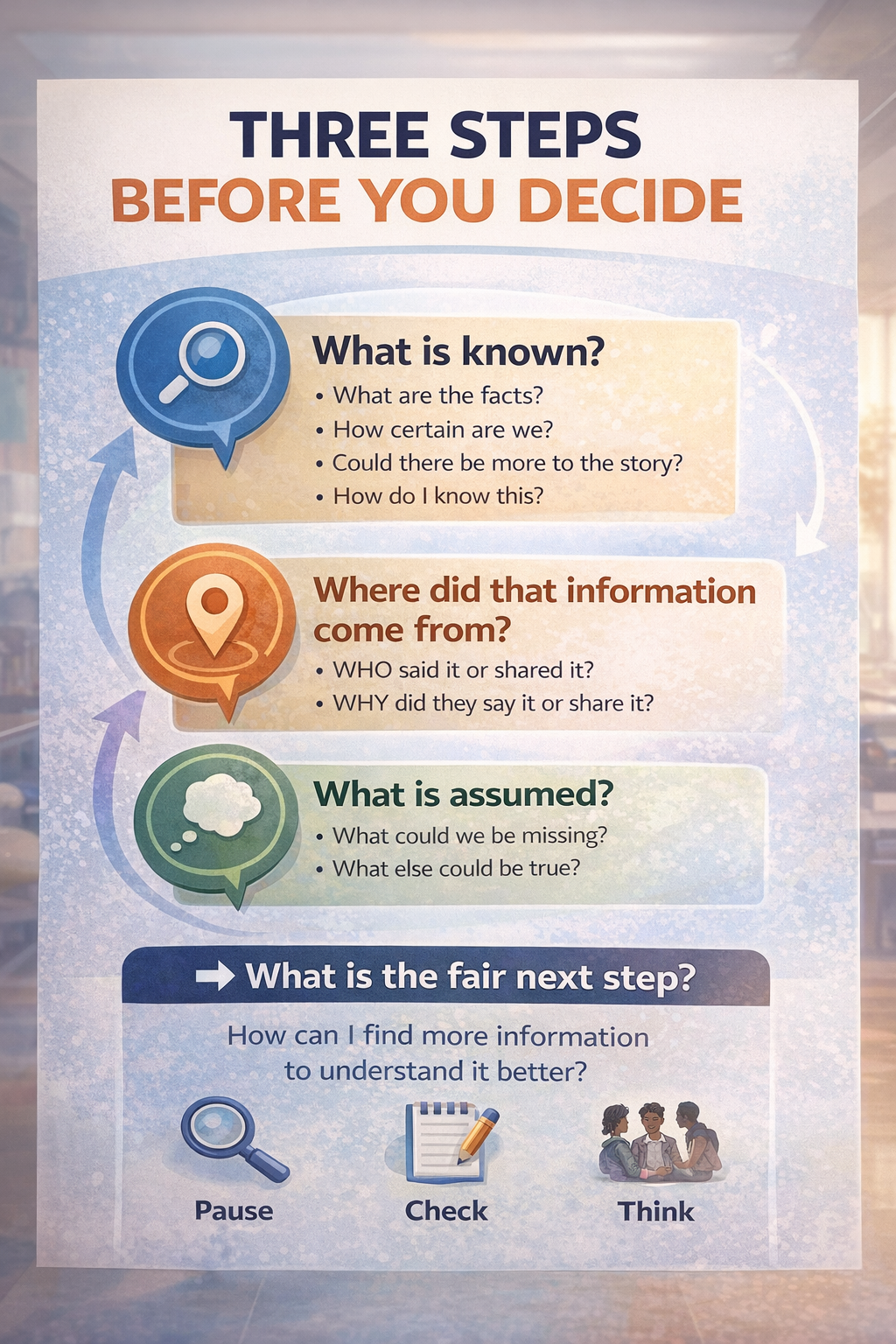
- Pause before joining the crowd
- Ask, “What do we actually know?”
- Ask, “What are we assuming?”
- Notice when people want certainty more than truth
- Be willing to say, “I do not think we know enough yet”
- Remember that not choosing instantly is sometimes the most responsible choice
Being thoughtful is not weakness. It is judgment.
When pressure becomes unfair
The mood changes quickly. People stop asking what happened. They start asking which side everyone is on.
This is one of the moments where fairness matters most.
If the group decides too fast, one person can carry the weight of everyone else’s certainty before the truth is clear.
Fairness is not only about being kind. It is about refusing to judge faster than the evidence allows.
Classroom exercise 1: Fact, guess, conclusion
Read a short scenario together. Then sort each statement into one of three columns:
Fact
What can be directly supported?
Guess
What might be true, but is not yet certain?
Conclusion
What are people already deciding?
Classroom exercise 2: The pressure line
Read out statements and ask students to stand somewhere along an imaginary line in the room between:
“I would speak up” and “I would probably stay quiet”
Example statements:
- A popular student says something unfair and everyone laughs.
- A screenshot is spreading, but you are not sure it tells the full story.
- Someone gives a very confident answer in class and you think it may be wrong.
- Your friends want you to repost something you do not fully trust.
Classroom exercise 3: Slow the story down
Give students a fast-moving scenario and ask them to rewrite it in slower steps.
Example:
- What happened first?
- What was actually seen?
- What was added later?
- At what point did confidence become stronger than evidence?
This helps students see how a story becomes larger and more certain as it moves through people.
Suggested examples that fit this age group
Examples that work well
- a screenshot with missing context
- a rumor about who likes whom
- someone being excluded after a short clip spreads
- a group deciding someone is lying before hearing them
- pressure to repost, react, or “pick a side”
Examples to avoid
- very adult or explicit relationship material
- trauma-heavy cases with no support structure
- examples too close to a real student in the room
- politically loaded examples that overwhelm the core lesson
Why this matters beyond school
These same patterns appear outside school too. In media. In public debate. In social networks. In politics. In moments of crisis.
People often move from a small piece of information to a large judgment very quickly. That is why learning to separate evidence, interpretation, and decision matters so much.
If you can do that here, you are building a skill that matters far beyond the classroom.
What this page is really teaching
It is teaching that pressure can distort judgment.
It is teaching that evidence matters more than noise.
It is teaching that fairness requires patience.
And it is teaching that thoughtful people do not always answer first, but they often understand more deeply.
Teacher Note
This page works well as one longer lesson or two shorter sessions. Students in this age group respond strongly to realism, especially around reputation, belonging, group chats, embarrassment, and social risk. The material works best when the room feels safe enough for uncertainty to be admitted without ridicule.
Keep the tone serious but not heavy. The aim is not to make students suspicious of everything. The aim is to help them distinguish evidence from assumption, and confidence from truth.
